Posts

Showing posts with the label Economics

13 British Colonies - Economics

Image
13 British Colonies - Economic Viewpoint Hey P2G Chelsea,  I just wanted to give you some quick economic background information on the early american colonial experience. You never know what might be on the TASC, but we do know that American history is a big focus. Good luck to anyone taking exams and remember to stay positive in your pursuit of education. European nations wanted colonies in the New World so they could pursue an economic system called mercantilism. Mercantilism is based on the idea that a mother country , a nation that controlled colonies,  should try and maintain a favorable balance of trade between itself  and their colonies in order to maximize profits. As a mother country, England, adopted mercantilism as an economic system and benefited from its North American colonies in two ways. The colonies supplied England with raw materials—lumber, furs, grain, and tobacco. In turn, colonists bought furniture, iron utensils, books, and china (porc...
Image
BANKING and MONEY Hey P2G Here is a review from our History class concerning the week of 3/14/2016. Our objectives included: To explain how has the concept of money evolved Describe how do banks operate How Has Money Evolved Originally Barter was used for the exchange of resources or services for mutual advantage, and the practice likely dates back tens of thousands of years, perhaps even to the dawn of modern humans. Some would even argue that it's not purely a human activity; plants and animals have been bartering—in symbiotic relationships—for millions of years. In any case, barter among humans certainly pre-dates the use of money. Today individuals, organizations, and governments still use, and often prefer, barter as a form of exchange of goods and services. Outside of China, the first coins developed out of lumps of silver. They soon took the familiar round form of today, and were stamped with various gods and emperors to mark their authenticity. The...

Economics: Business Models, Sole Proprietorship, Partnerships, and Corporations

Image
Business Models: Hey Class, here is a summary of the types of business models we discussed in class during the week of 3/7/16 Are Objectives included: Explaining the difference between a small and large business model Recognizing the key aspects of the corporate mode. SMALL BUSINESS Most business in the United States are Sole Proprietorship. This is the simplest form of ownership for a sole owner and requires little more than a tax ID number. This business model offers maximum freedom, but also has the risk of unlimited liability or in other words unlimited financial responsibility. On the positive side, the owners profits are only taxed once.  A Partnership  is the easiest business organization type to create, as it only requires an agreement, which can be verbal or written. In a partnership, the owners manage and control the business, and all revenue flows directly through the business to the partners, who are then taxed based on their portions of the...
Image
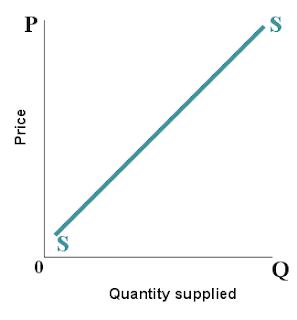
Economics: Supply, Demand, Shift, and Equilibrium Good Day P2G,  Hope all is well and that you have been reviewing your social studies notes. So what did we do in our TASC history class during the week of 2/29/2016?  Our overall objectives were to be able to explain: The factors that influence supply and demand What is market equilibrium "The law of supply and demand is the theory explaining the interaction between the supply of a resource and the demand for that resource. The  law of supply  and demand defines the effect that the availability of a particular product and the desire (or demand) for that product has on price. Generally, if there is a  low supply and a high demand,  the price will be high. In contrast, the greater the supply and the lower the demand, the lower the price will be" Source:  Investopedia SUPPLY Supply must always be understood from the perspective of the seller. Sellers always want to sell mo...